Cost to Hire a Web Developer in 2026
Compare web developer pricing by scope, stack, experience, and project type with practical hiring guidance for websites, ecommerce stores, SaaS products, and custom web apps.
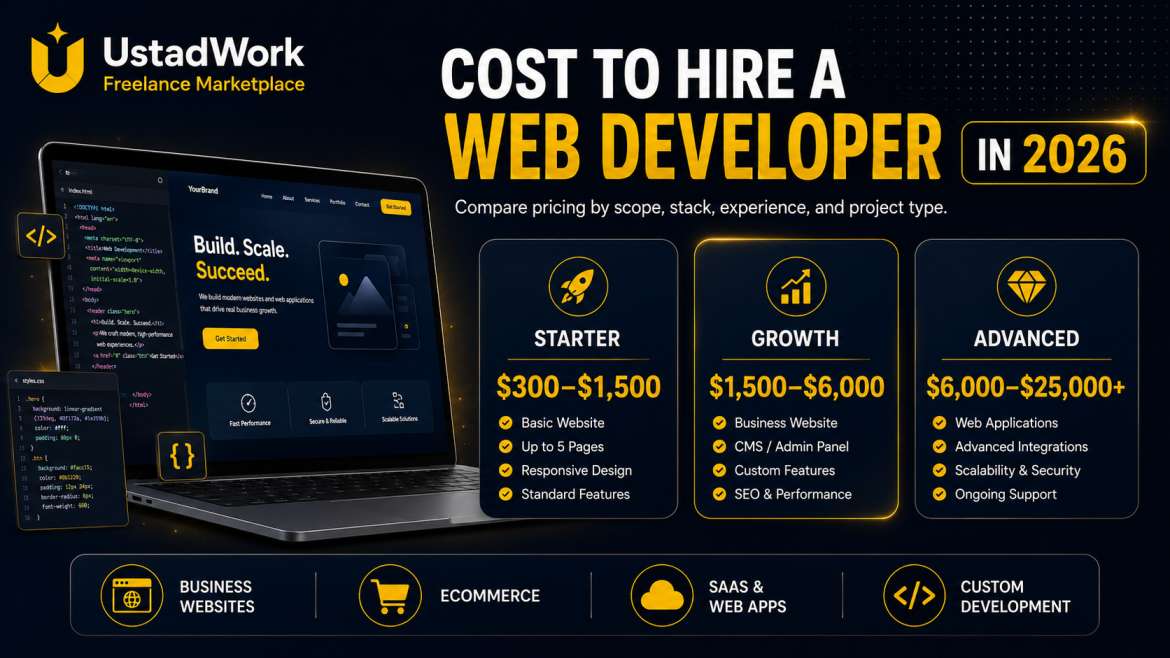
Cost to Hire a Web Developer in 2026
The cost to hire a web developer depends on what you are building. A simple landing page, website fix, or small design update may need only a few hours of work. A business website, ecommerce store, SaaS product, customer dashboard, or custom web application can require planning, design, frontend development, backend development, testing, deployment, and ongoing support.
The most useful question is not: What is the cheapest web developer? The better question is: What result do I need, what features are required, and what level of technical experience is needed to deliver it safely?
As a practical planning guide, small web-development tasks may start around $50 to $300. A business website may range from $800 to $3,500. Ecommerce projects, web applications, and custom SaaS products can require several thousand dollars or more depending on functionality, integrations, design, security, and long-term maintenance.
This guide explains the cost to hire a web developer by project scope, developer type, technology stack, and business goal. You can also explore web development services on UstadWork when you are ready to compare options.
The most useful question is not: What is the cheapest web developer? The better question is: What result do I need, what features are required, and what level of technical experience is needed to deliver it safely?
As a practical planning guide, small web-development tasks may start around $50 to $300. A business website may range from $800 to $3,500. Ecommerce projects, web applications, and custom SaaS products can require several thousand dollars or more depending on functionality, integrations, design, security, and long-term maintenance.
This guide explains the cost to hire a web developer by project scope, developer type, technology stack, and business goal. You can also explore web development services on UstadWork when you are ready to compare options.
Web Developer Pricing Models
Web developers usually work through fixed-price projects, hourly billing, or monthly retainers. The best option depends on how clearly you can define the work.
Fixed-price projects work best when the scope is clear. For example, you may need a landing page, a business website, a redesign, a dashboard screen, a booking form, or a specific set of website fixes. The developer reviews the requirements, gives a quote, and delivers the agreed work.
Hourly pricing is useful for troubleshooting, support, ongoing improvements, bug fixes, code reviews, integrations, maintenance, and projects where the final scope is still uncertain. Always ask for an estimated number of hours and set a budget limit before work begins.
Monthly retainers are useful when your business needs regular web support. A developer may handle landing pages, performance improvements, technical fixes, product updates, campaign pages, analytics, integrations, and ongoing maintenance. A retainer can be more efficient than hiring separately for every small request.
Fixed-price projects work best when the scope is clear. For example, you may need a landing page, a business website, a redesign, a dashboard screen, a booking form, or a specific set of website fixes. The developer reviews the requirements, gives a quote, and delivers the agreed work.
Hourly pricing is useful for troubleshooting, support, ongoing improvements, bug fixes, code reviews, integrations, maintenance, and projects where the final scope is still uncertain. Always ask for an estimated number of hours and set a budget limit before work begins.
Monthly retainers are useful when your business needs regular web support. A developer may handle landing pages, performance improvements, technical fixes, product updates, campaign pages, analytics, integrations, and ongoing maintenance. A retainer can be more efficient than hiring separately for every small request.
Web Developer Cost by Project Scope
The following ranges are planning estimates. Your final quote may be lower or higher depending on the developer's experience, location, technology stack, deadline, design quality, features, and testing needs.
Small website fixes or theme edits: $50 to $300
Examples include fixing mobile layouts, forms, buttons, broken pages, basic CSS issues, speed improvements, or small design changes.
Landing page or simple marketing page: $300 to $1,500
This may include a responsive layout, call-to-action sections, forms, analytics, mobile optimization, and basic SEO setup.
Business website: $800 to $3,500
This may include homepage, services, about, contact pages, content management setup, forms, mobile responsiveness, basic performance work, and launch support.
Ecommerce website: $1,500 to $7,500+
This may include product pages, collections, cart, payments, shipping, taxes, checkout setup, mobile optimization, reviews, upsells, and integrations.
Custom web application or SaaS MVP: $5,000 to $25,000+
This may include user accounts, dashboards, APIs, databases, subscriptions, admin panels, payment systems, notifications, and deployment.
Advanced custom platform: $25,000+
Complex marketplaces, multi-user SaaS products, enterprise dashboards, advanced automation, real-time features, custom integrations, and large web platforms can require a larger team and longer development timeline.
Small website fixes or theme edits: $50 to $300
Examples include fixing mobile layouts, forms, buttons, broken pages, basic CSS issues, speed improvements, or small design changes.
Landing page or simple marketing page: $300 to $1,500
This may include a responsive layout, call-to-action sections, forms, analytics, mobile optimization, and basic SEO setup.
Business website: $800 to $3,500
This may include homepage, services, about, contact pages, content management setup, forms, mobile responsiveness, basic performance work, and launch support.
Ecommerce website: $1,500 to $7,500+
This may include product pages, collections, cart, payments, shipping, taxes, checkout setup, mobile optimization, reviews, upsells, and integrations.
Custom web application or SaaS MVP: $5,000 to $25,000+
This may include user accounts, dashboards, APIs, databases, subscriptions, admin panels, payment systems, notifications, and deployment.
Advanced custom platform: $25,000+
Complex marketplaces, multi-user SaaS products, enterprise dashboards, advanced automation, real-time features, custom integrations, and large web platforms can require a larger team and longer development timeline.
Starter Web Development Budget: $300 to $1,500
A starter budget is suitable for clear, limited projects. This may include a landing page, portfolio website, simple business website, website redesign using an existing platform, basic WordPress setup, simple Shopify changes, or a focused website improvement.
Typical starter-project deliverables may include responsive design, a few main pages, contact forms, basic content setup, mobile optimization, simple analytics, and launch support. This level is useful when you already have your logo, text, images, pages, and business direction ready.
A starter budget usually does not include advanced custom functionality, complex integrations, SaaS dashboards, extensive copywriting, large product catalogs, custom applications, or major backend development. Before hiring, separate must-have items from nice-to-have ideas so the first project stays focused.
Typical starter-project deliverables may include responsive design, a few main pages, contact forms, basic content setup, mobile optimization, simple analytics, and launch support. This level is useful when you already have your logo, text, images, pages, and business direction ready.
A starter budget usually does not include advanced custom functionality, complex integrations, SaaS dashboards, extensive copywriting, large product catalogs, custom applications, or major backend development. Before hiring, separate must-have items from nice-to-have ideas so the first project stays focused.
Growth Web Development Budget: $1,500 to $6,000
A growth project is for businesses that need more than a basic website. You may already have traffic, customers, or an existing site but need better design, stronger mobile usability, improved conversions, ecommerce features, custom pages, integrations, or performance work.
This range may include a business-site redesign, conversion-focused landing pages, ecommerce improvements, custom forms, customer portals, booking systems, CRM connections, advanced WordPress or Shopify work, speed optimization, tracking setup, and stronger user experience.
A growth budget is often right when your website is important to sales or operations. At this level, you are paying not only for coding but also for planning, testing, quality checks, mobile experience, and a system that your business can use after launch.
This range may include a business-site redesign, conversion-focused landing pages, ecommerce improvements, custom forms, customer portals, booking systems, CRM connections, advanced WordPress or Shopify work, speed optimization, tracking setup, and stronger user experience.
A growth budget is often right when your website is important to sales or operations. At this level, you are paying not only for coding but also for planning, testing, quality checks, mobile experience, and a system that your business can use after launch.
Advanced Web Development Budget: $6,000 to $25,000+
An advanced budget is suitable for SaaS products, web applications, large ecommerce stores, customer dashboards, marketplaces, custom admin panels, subscription platforms, API integrations, internal tools, and multi-user systems.
Projects at this level may involve frontend development, backend development, database design, authentication, user roles, payment systems, cloud hosting, security, API integrations, testing, staging environments, monitoring, and documentation. A full-stack developer may handle some of this work, while larger projects may need designers, frontend developers, backend developers, QA support, and project management.
For advanced projects, do not hire from a short message alone. Prepare a detailed project brief, request milestones, define acceptance criteria, and make sure your business owns the code, hosting, domains, documentation, and admin access after launch.
Projects at this level may involve frontend development, backend development, database design, authentication, user roles, payment systems, cloud hosting, security, API integrations, testing, staging environments, monitoring, and documentation. A full-stack developer may handle some of this work, while larger projects may need designers, frontend developers, backend developers, QA support, and project management.
For advanced projects, do not hire from a short message alone. Prepare a detailed project brief, request milestones, define acceptance criteria, and make sure your business owns the code, hosting, domains, documentation, and admin access after launch.
What Affects Web Developer Cost?
Two projects can sound similar but have very different budgets. The biggest pricing factor is scope. A five-page brochure website is not the same as a five-page website with login access, payments, dashboards, API connections, automation, and customer data.
Project complexity: More features, screens, user roles, integrations, and workflows require more planning and testing.
Technology stack: A standard WordPress or Shopify project may cost less than a custom React, Next.js, Django, Laravel, Node.js, or SaaS build.
Design quality: Using an existing template is usually more affordable than creating a fully custom interface.
Frontend and backend work: A frontend-only website is different from a full-stack product with databases, APIs, authentication, and admin tools.
Mobile and performance: Responsive design, speed optimization, accessibility, browser testing, and Core Web Vitals work can affect budget.
Integrations: CRM systems, payment gateways, shipping tools, email platforms, analytics, calendars, and third-party APIs add technical work.
Deadline: Urgent delivery may cost more because the developer must prioritize your project or work outside normal planning.
Ongoing support: Maintenance, updates, monitoring, bug fixes, and product improvements should be budgeted separately.
Project complexity: More features, screens, user roles, integrations, and workflows require more planning and testing.
Technology stack: A standard WordPress or Shopify project may cost less than a custom React, Next.js, Django, Laravel, Node.js, or SaaS build.
Design quality: Using an existing template is usually more affordable than creating a fully custom interface.
Frontend and backend work: A frontend-only website is different from a full-stack product with databases, APIs, authentication, and admin tools.
Mobile and performance: Responsive design, speed optimization, accessibility, browser testing, and Core Web Vitals work can affect budget.
Integrations: CRM systems, payment gateways, shipping tools, email platforms, analytics, calendars, and third-party APIs add technical work.
Deadline: Urgent delivery may cost more because the developer must prioritize your project or work outside normal planning.
Ongoing support: Maintenance, updates, monitoring, bug fixes, and product improvements should be budgeted separately.
Freelancer vs Agency: Which Is Better?
A freelancer is often a strong choice for focused projects, direct communication, flexible budgets, website improvements, landing pages, ecommerce work, frontend development, WordPress, Shopify, and ongoing support. You usually communicate directly with the person doing the work, which can make decisions faster.
An agency may be better for larger projects that need several specialists at once. For example, you may need branding, UX design, frontend development, backend development, copywriting, SEO, testing, and project management. Agencies can provide more structure, but they usually cost more because you are paying for a wider team and management process.
The right choice depends on your scope. For a well-defined project, a skilled freelancer can provide excellent value. For a complex product or high-stakes launch, a team may reduce risk. The most important factor is not the label freelancer or agency. It is whether the provider understands your goal, communicates clearly, and can show relevant proof.
An agency may be better for larger projects that need several specialists at once. For example, you may need branding, UX design, frontend development, backend development, copywriting, SEO, testing, and project management. Agencies can provide more structure, but they usually cost more because you are paying for a wider team and management process.
The right choice depends on your scope. For a well-defined project, a skilled freelancer can provide excellent value. For a complex product or high-stakes launch, a team may reduce risk. The most important factor is not the label freelancer or agency. It is whether the provider understands your goal, communicates clearly, and can show relevant proof.
How To Create a Realistic Web Development Budget
Start with your business outcome. Do not only say that you need a website. Explain what the website or web app should help you achieve. You may need more leads, online orders, customer self-service, a SaaS product, a faster mobile experience, a booking system, a dashboard, or a replacement for manual work.
Next, list your must-have requirements. These are the features needed for launch. Then create a separate nice-to-have list for future improvements. This keeps the first phase focused and protects your budget.
Prepare assets before hiring. Useful assets include logo files, brand colors, copy, product data, images, wireframes, competitor examples, existing website access, hosting details, technical documentation, and third-party accounts. Missing assets can delay the project and increase cost.
For complex work, write a clear brief before posting a job. A detailed brief helps developers give more accurate quotes. You can also use our guide on how to write a freelance project brief once that guide is published.
Next, list your must-have requirements. These are the features needed for launch. Then create a separate nice-to-have list for future improvements. This keeps the first phase focused and protects your budget.
Prepare assets before hiring. Useful assets include logo files, brand colors, copy, product data, images, wireframes, competitor examples, existing website access, hosting details, technical documentation, and third-party accounts. Missing assets can delay the project and increase cost.
For complex work, write a clear brief before posting a job. A detailed brief helps developers give more accurate quotes. You can also use our guide on how to write a freelance project brief once that guide is published.
Web Developer Hiring Checklist
Before hiring a web developer, use this checklist:
Define the business outcome and target users.
List required pages, screens, features, integrations, and user flows.
Separate must-have features from future ideas.
Prepare your brand assets, content, product data, examples, and access details.
Decide whether you need frontend, backend, full-stack, WordPress, Shopify, ecommerce, or SaaS expertise.
Review portfolio work similar to your project.
Ask what the developer personally completed.
Ask how the project will be tested on mobile devices and browsers.
Confirm whether hosting, deployment, source code, domains, and access will be owned by your business.
Use milestones for larger projects.
Set revision limits and clear approval criteria.
Confirm post-launch support and future maintenance needs.
If your project is WordPress-based, read how to hire a WordPress developer without scope creep. When your scope is ready, you can browse web-development services and freelancers or post a web-development job on UstadWork.
Define the business outcome and target users.
List required pages, screens, features, integrations, and user flows.
Separate must-have features from future ideas.
Prepare your brand assets, content, product data, examples, and access details.
Decide whether you need frontend, backend, full-stack, WordPress, Shopify, ecommerce, or SaaS expertise.
Review portfolio work similar to your project.
Ask what the developer personally completed.
Ask how the project will be tested on mobile devices and browsers.
Confirm whether hosting, deployment, source code, domains, and access will be owned by your business.
Use milestones for larger projects.
Set revision limits and clear approval criteria.
Confirm post-launch support and future maintenance needs.
If your project is WordPress-based, read how to hire a WordPress developer without scope creep. When your scope is ready, you can browse web-development services and freelancers or post a web-development job on UstadWork.
Frequently Asked Questions About Web Developer Cost
The exact cost to hire a web developer varies because every project has different scope, technology, and business requirements. The most accurate quote comes after you define the outcome, features, timeline, and assets. Use the FAQs below to plan your next steps.
Hire the Right Web Developer for Your Budget
The best web developer is not always the lowest-priced option. The right developer understands your business goal, explains the scope clearly, recommends a realistic solution, communicates well, and delivers a website or product that your business can own and improve after launch.
Use the pricing ranges in this guide to plan your budget, but always request a scope-based proposal before making a hiring decision. Compare deliverables, milestones, technical approach, communication, testing process, handoff, and post-launch support — not only price.
Ready to begin? Explore web development services on UstadWork, browse freelancer service packages, or post a web-development job and compare proposals for your exact project.
Use the pricing ranges in this guide to plan your budget, but always request a scope-based proposal before making a hiring decision. Compare deliverables, milestones, technical approach, communication, testing process, handoff, and post-launch support — not only price.
Ready to begin? Explore web development services on UstadWork, browse freelancer service packages, or post a web-development job and compare proposals for your exact project.
Frequently asked questions
How much does it cost to hire a web developer?
Small website fixes may cost around $50 to $300. Landing pages and simple websites may range from $300 to $1,500. Business websites often range from $800 to $3,500, while ecommerce sites, SaaS products, and custom web applications can cost several thousand dollars or more.
Should I pay a web developer hourly or fixed price?
Use fixed pricing when the project scope is clear and deliverables are written down. Use hourly billing for troubleshooting, maintenance, open-ended improvements, and work where the final scope is still uncertain.
Why do web developer prices vary so much?
Prices vary because web projects can range from a small layout fix to a full web application with user accounts, APIs, databases, payments, dashboards, integrations, testing, security, and ongoing maintenance.
Is a freelancer or agency better for web development?
A freelancer can be ideal for focused work, direct communication, and flexible budgets. An agency may be better for larger projects that require several specialists such as design, frontend development, backend development, QA, SEO, and project management.
What should I include in a web developer job post?
Include your business goal, target users, required pages or screens, features, integrations, preferred deadline, budget range, assets you can provide, examples you like, and what must be completed before project approval.